
Close
(0) items
You have no items in your shopping cart.
All Categories
    Filters
    Preferences
    Search
    RSS

    2026, October

    0 Choosing the Right Equipment for your Restaurant

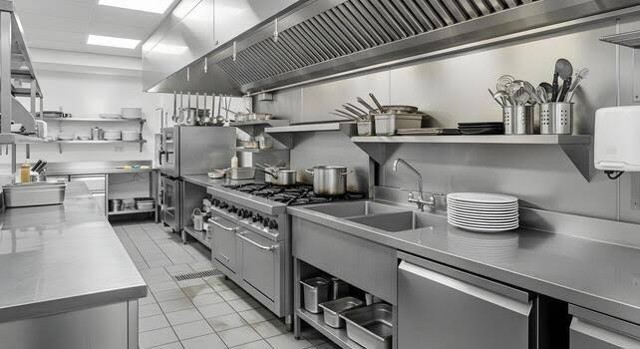
    Running a restaurant has never been simply about serving good food. Behind every successful service is a kitchen where refrigeration, cooking, preparation, washing and storage equipment all need to work together efficiently.

    With hospitality businesses continuing to face pressure from rising operating and labour costs, restaurants are increasingly looking at ways to make their kitchens more productive without compromising on quality. Having the right commercial catering equipment can play an important role in this.

    The key word is right.

    The most expensive piece of equipment is not necessarily the best choice for every restaurant. The ideal setup depends on your menu, kitchen size, level of service, staff requirements and the volume of food being produced.

    At Katerbay, we supply a range of commercial catering equipment and refrigeration from established brands including Unifrost, Banks and Atlas, helping businesses build kitchens around the way they actually operate.


    Start with What Your Restaurant Needs

    Before investing in new equipment, it is worth looking at where your kitchen currently spends the most time, space and labour.


    Is your refrigeration constantly full? Are staff waiting for cooking equipment during busy services? Is washing up becoming a bottleneck? Are employees spending too much time moving between preparation and storage areas?

    These questions can help identify where new equipment could make the biggest difference.

    For example, a restaurant with high refrigeration requirements may need additional upright storage, while a smaller kitchen could benefit more from an undercounter refrigerator that provides convenient storage without taking up valuable floor space.

    Likewise, a busy kitchen producing large quantities of food may need cooking equipment capable of handling continuous service, while a smaller café may be better suited to more compact equipment.


    Reliable Refrigeration with Unifrost

    Refrigeration is one of the most important areas of any professional kitchen. Fresh ingredients need to be stored safely, while having sufficient capacity allows staff to organise ingredients properly and access them efficiently during service.

    Unifrost is one of the refrigeration brands available through Katerbay, with a range covering many of the requirements of a commercial kitchen.

    The range includes products such as upright refrigerators and freezers, undercounter refrigeration, bottle coolers and refrigerated counters.

    For restaurants where space is limited, undercounter refrigeration can be particularly useful. A unit such as the Unifrost R200SN can provide additional refrigerated storage directly beneath a worktop, helping make better use of the available kitchen space.

    For larger storage requirements, upright refrigerators and freezers can provide significantly greater capacity while keeping ingredients organised and readily accessible.

    The important consideration is matching the refrigeration to the restaurant's operation. A busy kitchen that opens its refrigerators constantly throughout the day will have different requirements from a smaller establishment with lower turnover.


    Cooking Equipment That Can Keep Up

    Cooking equipment is at the centre of most restaurant kitchens, and the correct setup can have a significant impact on the speed and consistency of service.

    Banks is one of the established catering equipment brands available from Katerbay, providing equipment designed for professional kitchen environments.

    When choosing cooking equipment, restaurants should consider more than just the initial purchase price. Capacity, power, durability, ease of use and the amount of food being produced all need to be considered.

    A piece of equipment that is undersized for a busy kitchen may create delays during peak service, while equipment that is significantly larger than required can take up valuable space and add unnecessary expense.


    The objective is to have equipment that can comfortably handle the restaurant's normal workload without creating bottlenecks.


    Atlas Equipment for the Professional Kitchen

    Katerbay also supplies Atlas commercial catering equipment, giving restaurants another option when selecting equipment for demanding professional environments.

    From cooking and preparation to other essential kitchen requirements, commercial equipment needs to be capable of handling repeated use throughout the working day.

    For a restaurant, reliability is particularly important. If a key piece of equipment fails during a busy service, the consequences can extend beyond the cost of the repair. It can affect preparation, staff productivity and ultimately the customer experience.

    This is why choosing equipment from established commercial brands and considering factors such as servicing, spare parts and after-sales support is important when fitting out a

    professional kitchen.


    Don't Overlook Warewashing

    Cooking equipment and refrigeration often receive the most attention when a kitchen is being fitted out, but warewashing is just as important.

    A restaurant can have excellent cooking equipment and still struggle during service if plates, glasses, trays and utensils cannot be washed quickly enough.

    Commercial dishwashers are designed to process large quantities of items much more

    efficiently than domestic machines, helping kitchens keep up with the demands of service.

    The wider setup matters too. Entry and exit tables, sinks and suitable work surfaces can help create a more efficient flow through the wash area.

    At Katerbay, restaurants can source commercial dishwashers alongside associated sinks,

    tables and other catering equipment, allowing the different parts of the kitchen to work together rather than treating each appliance as an individual purchase.


    Make Your Kitchen Work for Your Staff

    Good equipment should make a kitchen easier to operate.

    Staff should not have to spend unnecessary time walking across the kitchen to retrieve ingredients, waiting for equipment to become available or working around poorly positioned appliances.

    This is where kitchen layout becomes particularly important.

    A restaurant could have high-quality equipment throughout the kitchen, but if the equipment is poorly positioned, the benefits can be reduced.


    Consider the journey ingredients take from storage, through preparation and cooking, to plating and washing. Positioning refrigeration, preparation surfaces, cooking equipment and warewashing areas around this workflow can help reduce unnecessary movement.

    Equipment such as undercounter refrigeration, refrigerated counters and compact cooking appliances can also help restaurants make better use of limited kitchen space.


    Think About the Cost Beyond the Price Tag

    When purchasing commercial catering equipment, the initial price is only one consideration. Restaurants should also think about:

    • Capacity: Can the equipment handle your busiest periods?
    • Energy consumption: What will it cost to operate over its working life?
    • Durability: Is it designed for regular commercial use?
    • Maintenance: How easy is it to clean and maintain?
    • Space: Will it fit comfortably into your kitchen?
    • Support: Are spare parts and servicing available if required?
    • Reliability: Can your business afford the disruption caused by equipment downtime? This is particularly important when comparing different brands and models.

    A lower purchase price does not necessarily mean a lower overall cost, while a more expensive piece of equipment is not automatically the right choice. The best investment is equipment that provides the capacity and functionality your restaurant actually needs.


    Choose Equipment Around Your Menu

    Your menu should also influence your equipment choices.

    A restaurant specialising in pizza will have different requirements from a traditional Irish restaurant. A café serving breakfast and lunch will have different priorities from a large commercial kitchen producing hundreds of meals each day.

    Think about your busiest dishes and the equipment required to prepare them.

    If your kitchen relies heavily on refrigerated ingredients, investing in suitable refrigeration could have a greater impact than upgrading a piece of equipment that is only used occasionally.

    Similarly, if your restaurant experiences significant pressure during peak cooking periods, increasing cooking capacity may help address a more important bottleneck.


    Building a Kitchen with Katerbay

    There is no single equipment setup that works for every restaurant.


    The right kitchen is one where the equipment matches the menu, the available space, the number of staff and the demands of the business.

    Katerbay offers a wide range of commercial catering equipment to help businesses build and improve their professional kitchens. From Unifrost commercial refrigeration to Banks and Atlas catering equipment, along with commercial dishwashers, sinks, stainless steel

    fabrication, cooking equipment and other kitchen essentials, the aim is to provide businesses with equipment suited to the demands of professional food service.

    Whether you are opening a new restaurant, refurbishing an existing kitchen or replacing equipment that has reached the end of its working life, taking the time to consider what your kitchen actually needs can help you make a more informed investment.

    The right equipment isn't simply about buying more. It's about choosing equipment that helps your kitchen work better.

    0 New F-Gas Regulations for Commercial Refrigeration: What Businesses Need to Know

    The latest EU F-Gas regulations are changing the way commercial refrigeration equipment is manufactured, sold and serviced.

    Businesses purchasing commercial fridges, freezers, bottle coolers, refrigerated display cabinets and other refrigeration equipment are increasingly seeing modern alternatives to traditional high-GWP refrigerants.

    The aim of the new regulations is to reduce the use of fluorinated greenhouse gases with a high

    environmental impact and encourage the transition towards lower-GWP refrigerants.

    This guide explains what the latest F-Gas regulations mean for commercial refrigeration, which refrigerants are affected and what businesses should consider when purchasing new refrigeration equipment.

    What Are F-Gas Regulations?

    F-Gases, or fluorinated greenhouse gases, are commonly used as refrigerants in commercial refrigeration, air conditioning and other cooling systems.

    Some F-Gases have a high Global Warming Potential (GWP). If released into the atmosphere through leaks or improper handling, these gases can have a significant impact on climate change.

    The EU's F-Gas Regulation is designed to gradually reduce the use of high-GWP refrigerants and encourage the use of more environmentally friendly alternatives.

    For businesses buying commercial refrigeration equipment, the refrigerant inside the unit is now becoming an increasingly important factor when choosing a new fridge, freezer or refrigerated display.

    How Do the New F-Gas Regulations Affect Commercial Refrigeration?

    The regulations introduce restrictions on the use of certain refrigerants in new equipment.

    These restrictions vary depending on the type of refrigeration equipment, its application and the refrigerant used.

    For many types of stand-alone commercial refrigeration equipment, the move away from high-GWP refrigerants is already well underway.

    This means that many modern products now use lower-GWP alternatives, including:

    • R290 (propane)
    • R600a (isobutane)
    • R744 (CO₂)

    The refrigeration industry is continuing to move towards systems that use refrigerants with a lower environmental impact.

    What Is Global Warming Potential (GWP)?

    When choosing commercial refrigeration equipment, one of the most important specifications

    to understand is the refrigerant's Global Warming Potential, commonly known as GWP.

    GWP measures the potential impact of a greenhouse gas compared with carbon dioxide.

    Generally, the higher the GWP of a refrigerant, the greater its potential environmental impact if released into the atmosphere.

    As F-Gas regulations continue to restrict high-GWP refrigerants, businesses should consider the refrigerant used in their refrigeration equipment alongside other important factors such as:

    • Storage capacity
    • Energy efficiency
    • Temperature range
    • Dimensions
    • Purchase price
    • Running costs
    • Future servicing requirements

    Which Refrigerants Are Replacing High-GWP F-Gases?

    R290 Refrigeration Equipment

    R290, also known as propane, is becoming increasingly common in commercial refrigeration equipment.

    R290 has a very low GWP and is used in a wide range of modern commercial refrigeration products.

    You may find R290 used in:

    • Commercial upright fridges
    • Commercial freezers
    • Bottle coolers
    • Back bar refrigeration
    • Refrigerated display cabinets
    • Multideck displays
    • Counter refrigeration

    R290 refrigeration equipment is becoming an increasingly popular option for businesses looking for modern, lower-GWP refrigeration solutions.

    CO₂ Refrigeration Systems

    CO₂, also known as R744, is commonly used in larger commercial refrigeration systems.

    CO₂ refrigeration systems are particularly common in larger applications, including:

    • Supermarkets
    • Large retail stores
    • Centralised refrigeration systems
    • Larger cold storage applications

    CO₂ has a very low GWP compared with many traditional synthetic refrigerants and is an

    important part of the transition towards lower-impact commercial refrigeration.

    R600a Refrigeration Equipment

    R600a, also known as isobutane, is another low-GWP refrigerant used in certain refrigeration applications.

    It is particularly common in smaller, self-contained refrigeration equipment.

    What Do the F-Gas Regulations Mean When Buying New Commercial Refrigeration?

    When purchasing a new commercial fridge, freezer, bottle cooler or refrigerated display cabinet, it is worth checking which refrigerant the unit uses.

    The refrigerant should be considered alongside the equipment's capacity, dimensions,

    temperature range and energy efficiency.

    Before purchasing new commercial refrigeration equipment, consider:

    1.  Which Refrigerant Does the Unit Use?

    Check the product specification to identify the refrigerant used.

    Modern equipment may use lower-GWP refrigerants such as R290, R600a or CO₂.

    2.  What Is the Refrigerant's GWP?

    Understanding the GWP of the refrigerant can help you make a more informed long-term purchasing decision.

    3.  Is the Equipment Suitable for Future Regulations?

    F-Gas regulations are continuing to change the refrigeration industry.

    Choosing modern equipment that uses a lower-GWP refrigerant can help businesses prepare for the future and reduce their reliance on refrigerants that may become increasingly restricted.

    4.  Consider Future Servicing and Maintenance

    The availability and cost of refrigerants can affect the long-term cost of maintaining commercial refrigeration equipment.

    For businesses operating equipment for many years, the refrigerant used can be an important factor when considering future servicing and maintenance requirements.

    Do You Need to Replace Existing Commercial Refrigeration Equipment?

    The introduction of new F-Gas regulations does not automatically mean that existing commercial refrigeration equipment must be replaced.

    Many businesses can continue to operate existing equipment.

    However, owners of older systems using high-GWP refrigerants should consider the potential long-term impact of changing regulations.

    Over time, businesses may experience:

    • Higher refrigerant costs
    • Reduced availability of certain refrigerants
    • Increased repair costs
    • Greater difficulty sourcing refrigerant for older equipment
    • Higher long-term maintenance costs

    If an existing refrigeration unit is approaching the end of its working life, replacing it with modern, lower-GWP refrigeration equipment may be worth considering.

    What Commercial Refrigeration Equipment Is Affected?

    F-Gas regulations can affect a wide range of commercial refrigeration equipment.

    Businesses purchasing or operating the following equipment should understand which refrigerant is used:

    • Commercial fridges
    • Commercial freezers
    • Upright refrigerators
    • Bottle coolers
    • Back bar fridges
    • Refrigerated display cabinets
    • Multideck display fridges
    • Deli counters
    • Serve-over counters
    • Cold rooms
    • Walk-in fridges
    • Walk-in freezers
    • Condensing units
    • Supermarket refrigeration systems

    The exact requirements can depend on the type of equipment and refrigeration system.

    How to Choose Future-Ready Commercial Refrigeration

    Choosing the right commercial refrigeration equipment is about more than simply finding the

    correct size or capacity. Businesses should consider:

    Energy Efficiency

    Efficient refrigeration equipment can help reduce energy consumption and long-term running costs.

    Refrigerant Type

    The type of refrigerant used can affect the environmental impact and future suitability of the

    equipment.

    Capacity

    Choose equipment that provides sufficient storage capacity for your business without

    unnecessarily increasing energy use.

    Application

    Different types of refrigeration are designed for different applications.

    For example, a bottle cooler, refrigerated display cabinet, commercial upright fridge and cold

    room all have different operating requirements.

    Long-Term Value

    The initial purchase price is important, but businesses should also consider energy costs, maintenance requirements and the expected lifespan of the equipment.

    Stop and Check Before Buying New Refrigeration Equipment

    Before purchasing new commercial refrigeration equipment, check:

    • Which refrigerant does the unit use?
    • What is the GWP of the refrigerant?
    • Is the equipment suitable for your application?
    • What temperature range does the equipment operate at?
    • Is the capacity suitable for your business?
    • What are the expected energy and running costs?
    • Will the equipment meet your long-term refrigeration requirements?

    For larger or more complex refrigeration installations, such as cold rooms or centralised systems, professional advice may be required before choosing a refrigeration system.

    The Future of Commercial Refrigeration

    The commercial refrigeration industry is moving towards equipment that uses lower-GWP refrigerants.

    R290, CO₂ and other climate-friendly alternatives are becoming increasingly important across commercial refrigeration.

    For businesses purchasing new equipment, the refrigerant used inside a commercial fridge or

    freezer should now be considered alongside capacity, energy efficiency and price.

    Choosing modern commercial refrigeration equipment with a lower-GWP refrigerant can help businesses reduce environmental impact while preparing for changing F-Gas regulations.

    At Katerbay, we supply a wide range of commercial refrigeration equipment for restaurants, cafés, bars, supermarkets, convenience stores and other foodservice businesses.

    When choosing your next commercial fridge, freezer, bottle cooler or refrigerated display cabinet, check the product specifications carefully and consider the refrigerant used as part of your purchasing decision.

    Shop Commercial Refrigeration at Katerbay

    Explore Katerbay's range of commercial refrigeration equipment, including:

    Choosing the right refrigeration equipment can help your business improve efficiency, protect

    stock and prepare for the future of commercial refrigeration.

    Sources and further information

    Blog archive